
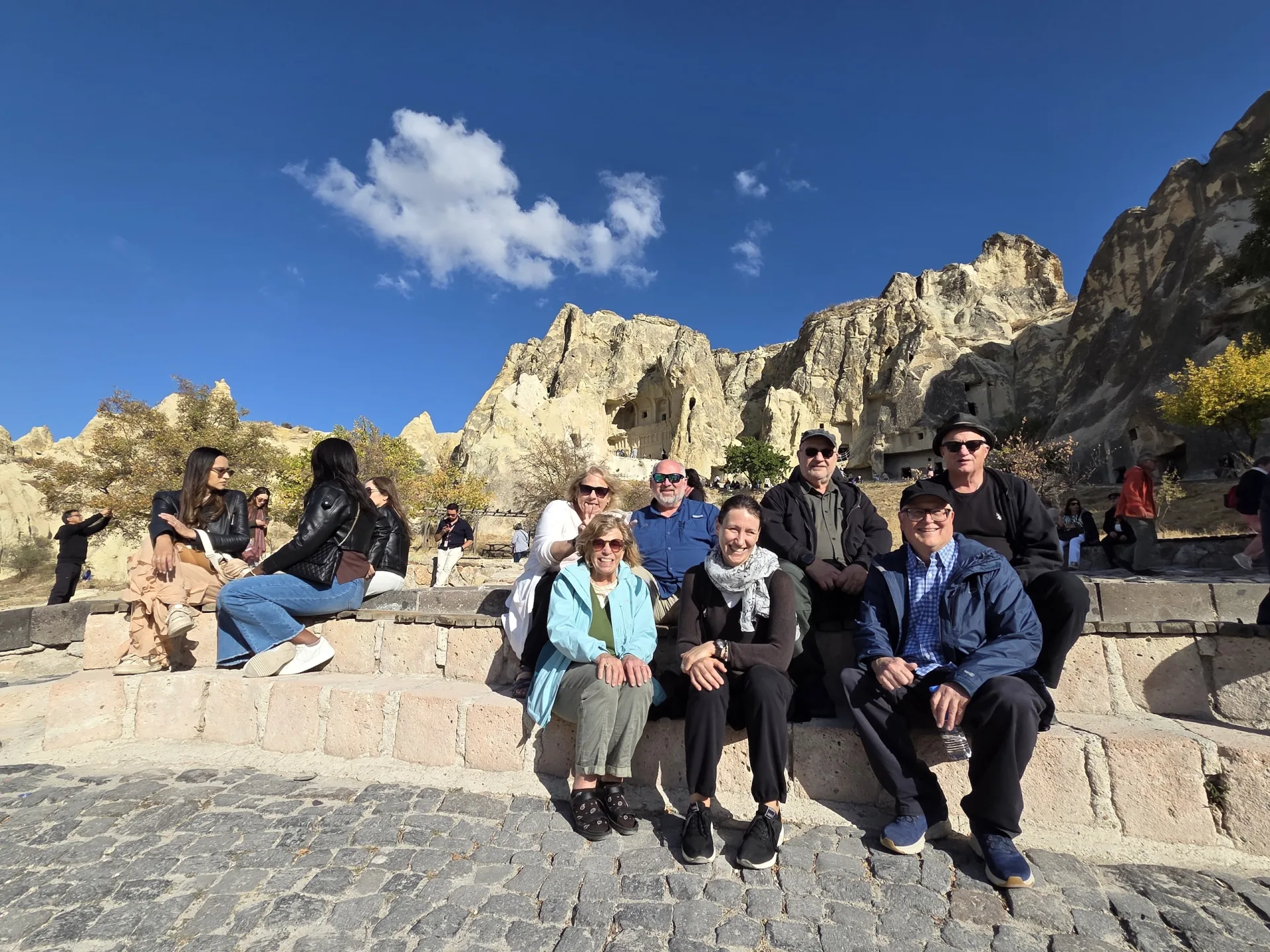
What is the Göreme Open Air Museum?
The Göreme Open Air Museum is a UNESCO World Heritage Site and one of Turkey's most visited attractions. It is a complex of rock-cut churches, monasteries, and dwellings carved into the volcanic tuff of the Göreme valley between the 6th and 13th centuries by early Christian communities.
The churches contain some of the finest surviving Byzantine frescoes in the world, depicting scenes from the life of Christ, the Virgin Mary, and the saints. The sheer number of intact paintings — despite centuries of exposure, vandalism, and the passage of time — makes this an extraordinary site.
The Key Churches
The Dark Church (Karanlık Kilise) — Extra Fee Required
The most important church in the complex. Its name comes from the fact that it has almost no natural light — which is exactly why its 11th-century frescoes are the best-preserved in Cappadocia. The vivid blues, reds, and golds have never faded. This is a bucket-list experience and requires an additional entrance fee beyond the main museum ticket.
Apple Church (Elmalı Kilise)
One of the oldest churches in the complex (6th–7th century), with a beautiful central dome. The name may derive from a nearby apple orchard or from a sphere held by the Archangel Michael in one of the frescoes.
Snake Church (Yılanlı Kilise)
Named for the prominent fresco of Saint George slaying a serpent. This church also features a striking image of Emperor Constantine alongside his mother Helena, which is historically unusual. The frescoes are painted directly on the rock surface without a plaster layer.
Barbara Church
A cross-plan church with simple, largely geometric decorations and a dramatic red ochre painting of Christ Pantocrator. Simpler than the other churches but worth visiting for its austere beauty.
Practical Information
The museum is located about 1km from Göreme village centre, walkable in 15–20 minutes or accessible by shuttle. It opens daily from 8:00am to 7:00pm in summer and slightly reduced hours in winter. Allow at least 2–3 hours for a thorough visit.
Entrance is via the Turkish Museum Card or a separate ticket. The Dark Church requires an additional ticket purchased at the site. Photography inside the churches is restricted to preserve the frescoes — follow signage carefully.
Best time to visit: Arrive when the museum opens (8am) or in the final two hours before closing to avoid the tour group rush. Midday in summer is the busiest and hottest period.
Visiting with a Guide
The museums and the frescoes have deep theological and historical significance that is difficult to appreciate without context. A knowledgeable guide can explain the iconographic programme — why specific saints appear together, what the symbols mean, and how the style changed over the centuries.