
The Underground Cities of Cappadocia
Beneath the surface of Cappadocia, carved into the soft volcanic tuff rock, lie 36 known underground cities and hundreds of smaller cave complexes. The two largest — Derinkuyu and Kaymaklı — are open to visitors and rank among the most astonishing archaeological sites in the world.
These cities were not built as temporary shelters. They were full communities — with stables for animals, storage rooms for food and wine, churches, schools, ventilation shafts, water wells, and even wine presses. At their height, they may have sheltered tens of thousands of people for months at a time.
Derinkuyu Underground City
Derinkuyu is the deepest of Cappadocia's underground cities, extending approximately 85 metres into the earth across 18 levels (8 of which are currently open to visitors). It could shelter approximately 20,000 people with their livestock and supplies.
The origins of Derinkuyu are uncertain — it may have been begun during the Hittite period (around 1200 BCE) and significantly expanded during the Byzantine era (7th–12th centuries CE) when Christian communities used it to escape Arab raids. It was rediscovered in 1963 by a local resident who found a mysterious room behind his basement wall.
Key features include enormous circular rolling stone doors (millstone-like) that could be pulled shut from inside, a vertical ventilation shaft 55 metres deep, a large communal hall on level 3, a church carved into the fourth level, and a connecting tunnel — 9km long — linking Derinkuyu to Kaymaklı.
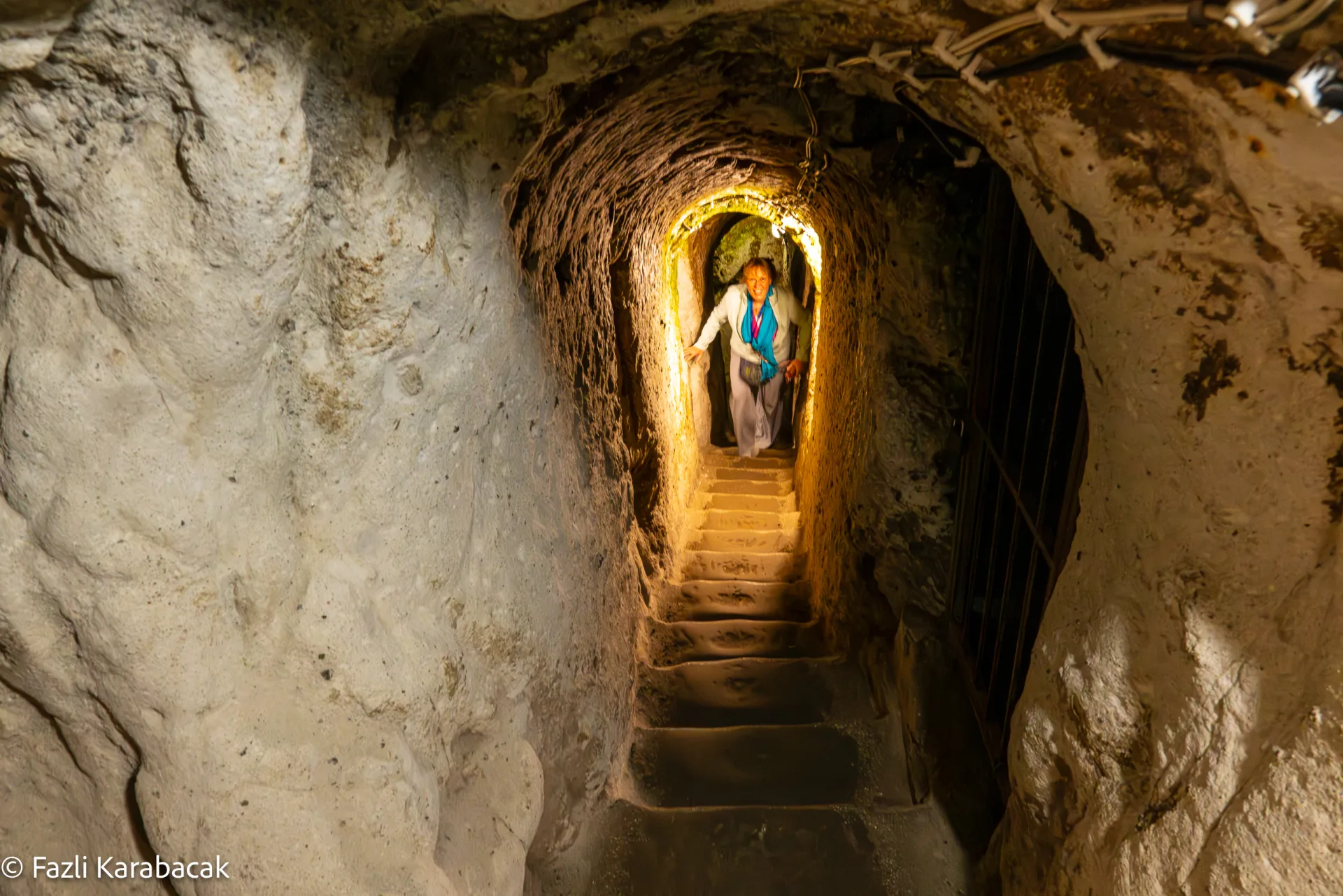
Practical information: Derinkuyu is located 30km south of Göreme, about 40 minutes by car. The underground passages are narrow and low in places. If you are claustrophobic, note that the passages can be tight at busy times. Visiting takes 45–90 minutes. The town itself has a pleasant main street with local cafes.
Kaymaklı Underground City
Kaymaklı is located 20km south of Göreme, directly under the town centre. It is in some ways more accessible than Derinkuyu — it has four open levels and is slightly more spacious — though it extends much deeper than the currently open section.
Kaymaklı is particularly notable for its elaborate storage system: large ceramic storage jars (pithoi) built directly into the floors of storage rooms suggest a sophisticated food preservation operation. The stables on level 1 can be clearly identified by the carved stone channels for tethering animals and draining waste.
Practical information: Kaymaklı is convenient to combine with Derinkuyu in a single day excursion. Alternatively, visiting Kaymaklı alone is a popular option for shorter stays. Opening hours and ticket prices are similar to Derinkuyu.
Why Were These Cities Built?
The most widely accepted theory is that the underground cities were primarily defensive refuges — built to hide communities during periods of invasion. Byzantine sources record Arab raids from the 7th century onwards that pushed the Christian population of Cappadocia underground for months at a time.
However, the complexity of the cities — with dedicated spaces for livestock, food production, churches, and apparent long-term habitation — suggests they were used not just for brief shelter but as permanent or semi-permanent communities during prolonged instability.