
Quick Answer
We recommend three full days in Cappadocia for first-time visitors. Start with a sunrise hot air balloon flight and explore Göreme Open Air Museum on Day 1. Day 2 combines the Rose Valley hike, Paşabağ fairy chimneys, and an Avanos pottery workshop. Day 3 covers an underground city (Derinkuyu or Kaymaklı) and the Ihlara Valley hike. This itinerary balances iconic attractions, active exploration, and cultural experiences without rushing. Most visitors tell us afterward they wish they’d booked a fourth day for side trips or to rest their feet.
Day 1: Balloons, History, and Castle Views
We always start the day before sunrise. Hot air balloon flights depart between 5:30 and 6:00 a.m., depending on the season and wind conditions. You’ll meet your balloon company at their office in Göreme or Ürgüp—most hotels arrange pickup around 5:00 a.m.—and drive 10 to 15 minutes to the launch field. The flight lasts approximately 45 minutes to one hour, rising to 300 to 600 meters above the landscape. November through April offers the most stable winds and clearest skies. In summer, flights sometimes cancel because thermals make control difficult. Bring a light jacket; it’s cool at altitude.
Balloon flight costs range from €120 to €250 per person, depending on the company. Budget operators offer basket flights with 16 to 20 passengers; premium companies take four to eight people in smaller baskets. We always tell visitors: the view is nearly identical from both, so choose based on your budget and comfort level. After landing, the balloon company serves champagne and certificates around 7:30 a.m.
Return to your hotel by 8:30 a.m., shower, and meet for breakfast. We recommend eating at your hotel or a central café in Göreme. Have strong Turkish coffee or tea, fresh bread, local cheese, olives, and eggs. You’ll need energy for walking.
By 10:00 a.m., head to Göreme Open Air Museum. Entry is 150 Turkish Lira (approximately €5 USD) per person. The museum is a UNESCO World Heritage Site containing rock-carved churches and dwellings from the 10th to 12th centuries. Plan 1.5 to 2 hours here. The most photographed church is the Darkle Church, with its distinctive cross-shaped interior carved entirely from stone. We recommend hiring a local guide for one hour (50 to 80 lira) who can explain the Byzantine frescoes and architecture; many details invisible to untrained eyes become clear with guidance.
The paths climb gently but steadily. Wear comfortable walking shoes with ankle support. The site has no shade, so bring a hat and water bottle. In summer, visit by 9:00 a.m. if possible—the afternoon heat is intense.
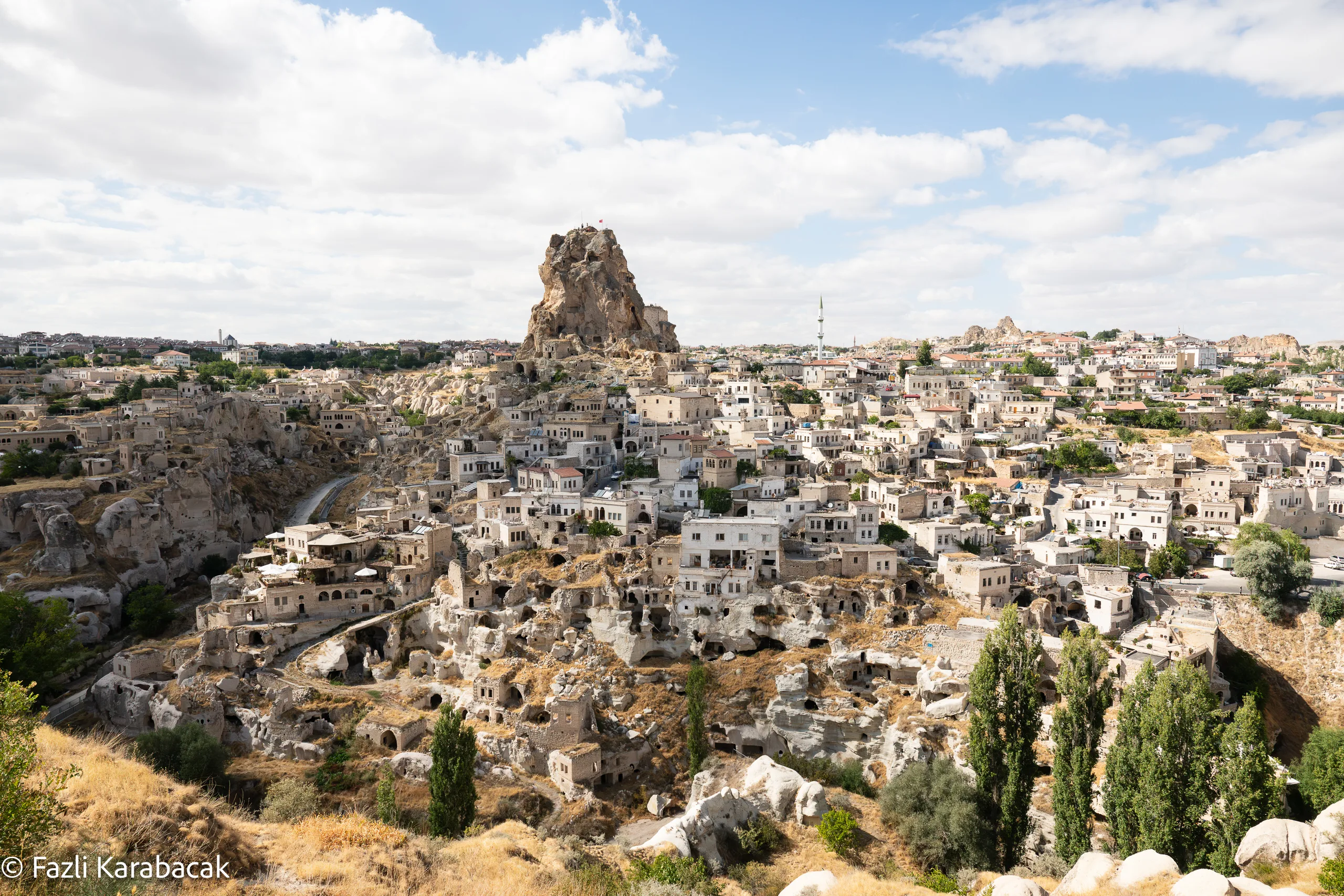
By midday, head to Uçhisar Castle (6 kilometers from Göreme, reachable by car or dolmuş). Entry is 75 lira. The castle sits atop a volcanic tuff cone 70 meters high. The internal passages are narrow and dark—bring a flashlight or use your phone’s light. The 360-degree views from the top are worth the climb. Count on 45 minutes to one hour, including the internal passages. It’s also worth simply walking around the base of the castle to photograph the surrounding fairy chimneys; many visitors skip the internal climb.
Eat lunch in Ürgüp around 1:00 p.m. at a traditional restaurant like Sarı Konak or Faralya. Try local specialties: pottery-cooked stews (güveç), lentil soup, and grilled kebabs. Budget 200 to 300 lira per person including drinks.
The afternoon is free. You can rest at your hotel, visit the Göreme Pottery Museum (50 lira, 30 minutes), or simply walk through Göreme’s streets and photograph the fairy chimneys from ground level.
For sunset (around 7:00 to 8:00 p.m. depending on season), drive to one of two viewpoints: Lover’s Hill overlooks Göreme town and is shorter to reach, or Red Valley Viewpoint offers more dramatic red rock formations. Both are worth seeing. Bring a light layer for the evening chill. Many tour groups crowd these viewpoints, so we recommend arriving 30 minutes before sunset to secure a quiet spot. Return to town by 8:30 p.m. for dinner and rest—you’ve walked 8,000 to 10,000 steps today.
Day 2: Valleys, Fairy Chimneys, and Pottery
Begin Day 2 around 9:00 a.m. with a hike through Rose Valley. The Rose Valley trailhead is in Çavuşin village (8 kilometers north of Göreme). A dolmuş or taxi costs 40 to 60 lira; many hotels arrange guides for €30 to €50 for a small group. The full loop is 5 kilometers and takes 2 to 2.5 hours at a moderate pace. We recommend the shorter version: walk from Çavuşin to the valley floor (1 kilometer down), explore the rose-colored rock formations, then climb back up (1 kilometer). This takes 1 to 1.5 hours and is easier on the knees.
The trail descends steeply but is well-marked. Wear sturdy hiking boots; the volcanic rock is sharp and unforgiving. Bring at least 1.5 liters of water per person. The valley is relatively quiet compared to other Cappadocia sites because fewer tourists venture here. You’ll pass pigeon houses carved into cliff faces and small Byzantine chapels. The light is best in mid-morning (9:00 to 11:00 a.m.) when the sun illuminates the rock formations without harsh shadows.
Return to Çavuşin by 11:00 a.m., or continue to nearby Red Valley (Kızılvadi) if you have extra energy. Red Valley takes an additional 45 minutes to 1 hour and offers even more dramatic red and ochre rock formations with fewer crowds.
By lunchtime, drive to Paşabağ (Fairy Chimneys), located 2 kilometers east of Çavuşin. This site is free and open all day. The three tallest fairy chimneys (30 to 40 meters high) with mushroom-shaped caps are the most photographed formations in Cappadocia. Plan 45 minutes to one hour here. Climb the wooden platforms and walk between the formations. The rock is stable, but steps are steep and narrow. No formal paths exist; simply follow other visitors.
Eat lunch at one of several small restaurants near Paşabağ. Try “Caveman Restaurant” or similar establishments carved into the rock. Expect kebabs, soups, and fresh salads at 200 to 280 lira per person.
In the afternoon (2:00 to 3:00 p.m.), visit Devrent Valley (also called Imagination Valley), 3 kilometers south. Entry is free. This valley is less touristy than others because the formations are lower and require more imagination to appreciate. Guides point out shapes: camels, dolphins, and dragons hidden in the rocks. Walk for 30 to 45 minutes among low rock formations. The light is good in the early afternoon before sun angles become too steep. Many visitors skip this—we consider it underrated.
By 4:00 p.m., head to Avanos, a pottery town 8 kilometers northeast. Avanos is known for red earthenware made from clay collected from the Red River. Visit a pottery workshop like Chez Galip (the most famous) or several smaller family shops. Entry is free; workshops hope you’ll buy something. Watch artisans throw pots on wheels, then try it yourself for 10 to 15 minutes (no charge). Buy a small pot (€8 to €20), a cup (€3 to €8), or simply observe. These workshops are touristy but genuine—the pottery is functional, not decorative trinkets.
For dinner (7:00 to 8:00 p.m.), remain in Avanos or return to Göreme. We recommend a wine tasting at one of Cappadocia’s local wineries. Emir and Narince grapes grow uniquely in Cappadocia’s volcanic soil. Aya Sophia Wines, Turasan, or smaller boutique wineries offer tastings for 100 to 150 lira per person, with three to five wine samples and local cheese and bread. Local wines are excellent value—bottles cost 60 to 120 lira retail. Book ahead if possible. The experience concludes by 8:30 p.m.
You’ve covered 3 to 5 kilometers of hiking today plus extensive walking. Soak in a thermal bath if your hotel offers one, or simply rest.
Day 3: Underground Cities and Valley Hikes
Day 3 combines Cappadocia’s most dramatic underground site with one of its best valley hikes. We recommend an early start.
Depart by 8:30 a.m. toward Derinkuyu Underground City (35 kilometers south of Göreme, a 45-minute drive). We prefer Derinkuyu over Kaymaklı because it’s larger, less crowded, and better lit. Entry is 300 lira per person.
The underground city descends eight levels (though visitors typically explore only the first five). The passages were carved from soft volcanic rock beginning around 1200 BCE. They hosted thousands of people during periods of invasion. We walk hunched through narrow corridors, past storerooms, kitchens, stables, and sleeping quarters. Some passages are barely 1.5 meters high—tall visitors will crouch. The air is cool and humid.
Plan 1 to 1.5 hours inside. Bring a light jacket; it’s 13 to 15 degrees Celsius year-round. Some visitors experience claustrophobia, especially on lower levels. Climbing stairs is the main physical demand. The entrance level features a small museum with pottery and stone tools. This is educational, not adrenaline-pumping, but essential for understanding Cappadocia’s history.
Exit by 10:30 a.m. and drive 25 kilometers north to Ihlara Valley. This is a canyon cut by the Melendiz River. We recommend the shorter Belisırma Walk (3.5 kilometers one-way, approximately 1.5 to 2 hours) rather than the full 14-kilometer canyon hike. Entry to the valley is free.
Begin at the north entrance near Belisırma village. Descend 150 meters into the canyon on a well-maintained path. The river runs alongside. Byzantine churches (9th to 12th centuries) are carved into both cliff faces; some contain intact frescoes. The path is mostly flat within the canyon, making this hike easier than Rose Valley the previous day.
We recommend exploring Kokar Kilise (Fragrant Church) and Yılanlı Kilise (Church with Snakes), both accessible with minor scrambling. Plan to walk 3.5 kilometers, exploring caves and churches, then turn back. The northernmost villages offer small restaurants where you can rest and eat traditional soup (100 to 150 lira).
The valley is shaded by overhanging cliffs, making it pleasant even in warm seasons. Wear hiking shoes, bring water, and start by 11:00 a.m. to finish by 2:00 p.m. before midday heat intensifies.
Exit the valley and drive 15 kilometers east to Selime Monastery, perched on a cliff edge overlooking the valley. Entry is free. The monastery dates to the 13th century and is massive—a three-story monastic complex carved into the rock. Monks’ cells, refectories, and a chapel are clearly visible. The views are spectacular. Plan 45 minutes to one hour, including the descent to see the lower levels.
On the return drive to Göreme (45 kilometers, 1.5 hours), pass through Pigeon Valley (Güvercinlik Vadisi). We recommend a short stop to photograph the distinctive pigeon houses carved into cliff faces. The pigeons were bred for their droppings, which were used as fertilizer. This 15-minute photo stop is on the way and worthwhile.
Reach your accommodation by 5:00 to 5:30 p.m. Dinner can be early, around 7:00 p.m., at your hotel or a favorite restaurant from the previous days. Many visitors rest and do laundry on this evening.
Practical Details and Packing
Walking and Fitness: This itinerary involves 8 to 12 kilometers of hiking across three days, plus 5 to 8 kilometers of walking among attractions. Cumulative elevation change is modest (300 to 400 meters), but volcanic rock is unforgiving. We recommend moderate fitness level—anyone comfortable with 2 hours of daily walks can manage.
Footwear: Invest in good hiking boots with ankle support. The volcanic rock (tuff) is sharp and crumbles underfoot. Never wear sandals or casual sneakers on trails.
Water: Carry at least 1.5 to 2 liters of water daily. Refill at hotels or restaurants; bottled water is available but expensive.
Seasons: We recommend April through May or September through October for comfort. Temperatures are 15 to 25 degrees Celsius, with stable weather. Summer (June to August) brings temperatures of 30 to 35 degrees Celsius and more tourists. Winter (December to February) is quiet but cold (5 to 12 degrees Celsius) with occasional rain.
Sunrise and Sunset Times:
- April: Sunrise 6:45 a.m., sunset 7:45 p.m.
- May: Sunrise 6:15 a.m., sunset 8:30 p.m.
- September: Sunrise 6:45 a.m., sunset 7:15 p.m.
- October: Sunrise 7:15 a.m., sunset 6:00 p.m.
Guides: We recommend hiring local guides for Göreme Open Air Museum (1 hour, 50 to 80 lira) and Rose Valley or other hikes (half-day, €30 to €60 for a small group). Guides provide context and history; self-guided visits lack depth.
Transportation: Dolmuş minibuses connect towns cheaply (40 to 100 lira per trip). Many hotels arrange drivers for full-day tours (€40 to €80 total for one to three people). Renting a car is possible but navigation is challenging without local knowledge.
Meals and Dining: Budget 800 to 1200 lira (€25 to €40 USD) per day for three meals. Hotels often include breakfast. Lunch and dinner average 250 to 350 lira per person at local restaurants. Wine tastings add 100 to 200 lira. Avoid tourist-trap restaurants directly on main streets; walk 100 meters into neighborhoods for better value.
Currency: Turkish Lira is the local currency. US dollars and euros are accepted in tourist areas but at unfavorable rates. Withdraw lira from ATMs.
Sun and Hat: The sun is intense and reflects off light-colored rock. Bring a wide-brimmed hat, sunglasses, and SPF 50+ sunscreen. Reapply every two hours during hiking.
Beyond Three Days: Extensions
If you have a fourth or fifth day, consider these additions:
Soğanlı Valley (50 kilometers southeast): A less-touristed valley with Byzantine churches and pigeon houses. Plan a full day; it requires a 90-minute drive from Göreme. Hire a guide (€40 to €60) to find the churches.
Horseback Riding: Several operators offer rides through valleys ($30 to $60 per hour). We recommend sunset rides through Rose Valley or Red Valley. Rides are typically easy paces suitable for beginners.
Turkish Cooking Class: Local cooks teach traditional dishes (börek, kebabs, pottery-cooked stews) over 3 to 4 hours ($25 to $50). You’ll eat the food you prepare.
Thermal Pools: The town of Akyarlar, 20 kilometers south, features natural hot springs (40 to 45 degrees Celsius). Day visits cost 100 to 200 lira and include lunch.
Photography Tours: Professional photographers offer sunrise or sunset photo tours ($60 to $100) targeting optimal light. Worthwhile if photography is a priority.
Frequently Asked Questions
Should I book a guide for the entire three days?
It depends on your comfort level and interests. We recommend guides for Göreme Open Air Museum (history is dense) and for at least one hike (Rose Valley or Ihlara). Paşabağ, Devrent, and Derinkuyu are self-guided easily. Budget €80 to €150 for guides across three days if you hire for one museum visit and one hike.
Which underground city is better—Derinkuyu or Kaymaklı?
Derinkuyu is larger, better lit, and feels less crowded. Kaymaklı is closer to Göreme (12 kilometers versus 35 kilometers) and slightly better preserved, but passages are narrower. We recommend Derinkuyu for first-time visitors unless you’re pressed for time.
Can I skip the hot air balloon flight if I’m afraid of heights?
Yes. The balloon is stable and moves slowly; it rarely feels dangerous. Many nervous visitors describe the flight as surprisingly peaceful. However, if heights truly terrify you, the experience won’t change your mind. Instead, watch balloons from the ground at sunrise from any Göreme viewpoint—the views are nearly as impressive.
How much should I budget for three days in Cappadocia?
Budget €200 to €400 per person for three days (excluding accommodation). This covers balloon flight (€150 to €250), site entries (€20 to €30), transportation (€20 to €30), meals (€25 to €40), and guides (€30 to €80). Wine tastings and pottery workshops add €20 to €40.
What if I get blisters or my knees hurt?
We’ve all seen visitors injured. Bring blister care, athletic tape, and pain relievers. Many hikes can be shortened—don’t feel obligated to complete full loops. Ihlara Valley’s Belisırma section is moderate and can be shortened further. If injured, rest at your hotel and visit site entries that require little walking (Uçhisar Castle interior or Paşabağ fairy chimneys) instead of hikes.
Should I stay in Göreme, Ürgüp, or Avanos?
Göreme is closest to most attractions and balloon flights, making it the most convenient base for three days. Ürgüp is larger, more upscale, with better restaurants and nightlife. Avanos is quietest and centered on pottery. We recommend Göreme for first-time visitors with three days; you’ll minimize driving time.
Ready to Explore?
Three days gives you an authentic first experience of Cappadocia’s geology, history, and local culture without rushing. We’ve guided thousands through this itinerary—most tell us afterward they wish they’d booked a fourth day to rest their feet or revisit a favorite spot. But honestly, three days is sufficient to understand why Cappadocia has captivated visitors for centuries.
Start with the sunrise balloon flight. Let the landscape take your breath away. Walk the valleys. Touch the rock-carved churches. Sit with local potters. The rest follows naturally.
For deeper exploration, you might also read our guides on where to stay in Cappadocia, things to do in Cappadocia, the best time to visit Cappadocia, and hiking trails in Cappadocia. We also recommend learning about Cappadocia’s Göreme Open Air Museum, underground cities, and fairy chimneys.
For a broader look at Turkish archaeology, visit Göbekli Tepe and Karahan Tepe—both are UNESCO sites with even earlier histories than Cappadocia, though they require separate trips.
We’re here if you have questions.
—Fazli